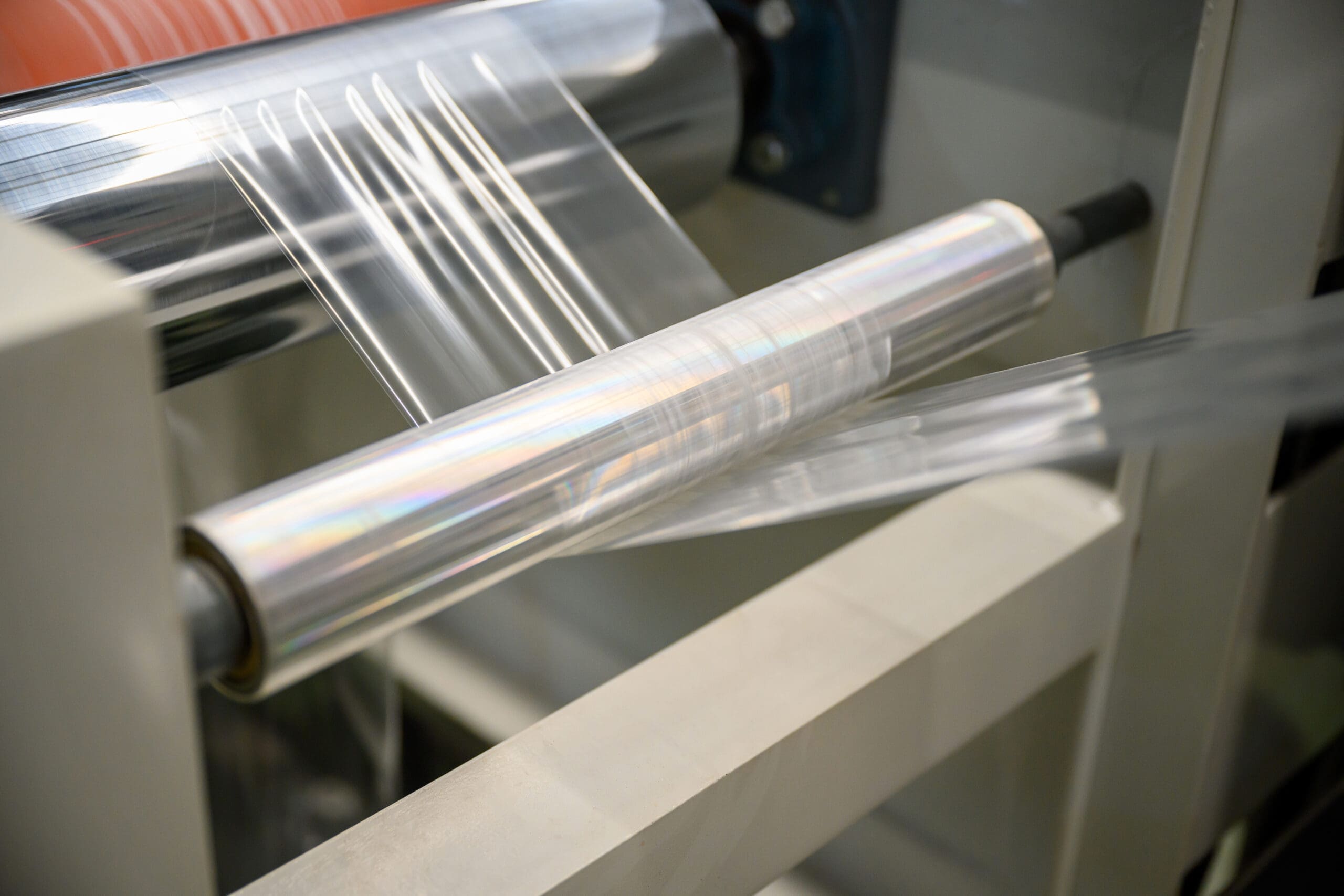
Corona treatment plays a critical role in preparing plastic films for printing, coating and lamination by increasing surface energy and improving wettability.
However one of the biggest misconceptions is that more treatment automatically means better adhesion, but over‑treating plastic films (commonly polyolefin films such as PE and PP) can create a range of technical and quality problems. While treatment is essential to raise surface energy, too much treatment can actually reduce performance instead of improving it.
Below is a practical overview of the main problems, aligned with what converters and printers typically experience.
Practical rule of thumb
More treatment isn’t better treatment. The aim is to achieve the surface energy needed for reliable adhesion while preserving the integrity of the polymer surface.
For many PE and PP films:
- Printing & coating: around 38–42 dyne/cm
- Lamination: typically 40–44 dyne/cm, depending on system
Going significantly above the treatment level required for your application can increase risk without delivering any additional adhesion benefits.
Weak and unstable adhesion
Excessive treatment can accelerate surface ageing, allowing the treated surface to reorganise faster, causing the surface energy to drop more rapidly during storage, leading to inconsistent print quality or laminate failures later in the process.
Typical symptoms
- Good dyne levels initially, poor adhesion days or weeks later
- Ink or adhesive passes dyne test but still peels or delaminates
- Laminate bond strength reducing over time
Formation of weak boundary layers (over oxidation)
Over‑treating oxidises the surface excessively, producing low‑molecular‑weight oxidised material (LMWOM). This creates a weak boundary layer that sits between the substrate and the ink/adhesive, reducing actual bond strength despite high surface energy readings.
Typical symptoms
- High dyne level but poor mechanical bond strength
- Adhesive failure at the interface rather than cohesive failure
Blocking and roll adhesion
Film layers that unwind cleanly immediately after production may begin to stick to each other in the roll if the surface has been over-treated. This can lead to blocking, particularly in tightly wound rolls or warm storage conditions.
Typical symptoms
- Film tearing or delamination during unwinding
- Blocking strongest toward the roll core
Reduced heat‑seal performance
Applying higher corona treatment can reduce seal strength, particularly relevant for flexible packaging applications. Excessive treatment can narrow the sealing window, making sealing performance less consistent even though sealing temperatures remain unchanged.
Typical symptoms
- Narrow heat‑seal window
- Seal failures despite unchanged sealing parameters
Brittleness and surface damage
Surface degradation caused by excessive oxidation can make films less tolerant of downstream converting operations. Excessive treatment can contribute to surface cracking on sensitive materials.
Typical symptoms
- Cracking during folding or creasing
- Reduced flex durability
Colour change and yellowing
Over‑oxidation can deplete stabilisers (especially phenolic antioxidants) and cause yellowing or discolouration, particularly in white or clear PE/PP films.
Typical symptoms
- Yellow or pink tint after treatment or storage
- Increased customer complaints on appearance
Poor long term lamination performance
Reliable lamination depends on achieving the correct treatment level – not the highest possible one. Some studies have shown that excessive corona dosages can reduce laminate bond strength on certain films (notably BOPP), even if they initially appear well treated.
Typical symptoms
- Reduced laminate bond strength after storage
- Delamination despite acceptable initial dyne levels
False security from dyne testing
Dyne testing remains one of the quickest ways to verify surface energy, but it should not be relied upon as the sole indicator of adhesion performance. Dyne pens measure wettability, not real bond strength. Over‑treated films often pass dyne tests while still failing in printing, coating, or lamination because the surface chemistry has been damaged or destabilized.
Successful surface treatment isn’t about applying as much power as possible, it’s about applying the correct amount consistently. Corona treaters are designed to deliver stable treatment levels across changing production conditions, helping converters to achieve reliable adhesion while avoiding the risks associated with under-or over-treatment.
The goal is always to achieve the right treatment level, every time.