Like all machines, a corona treater performs at its best if it’s correctly and regularly maintained. But, because it’s a relatively simple and reliable process, many converters give little thought to their surface treatment unit once it’s been installed. However, it’s the installation and the need for occasional maintenance that hold the key to a long working life of peak performance.
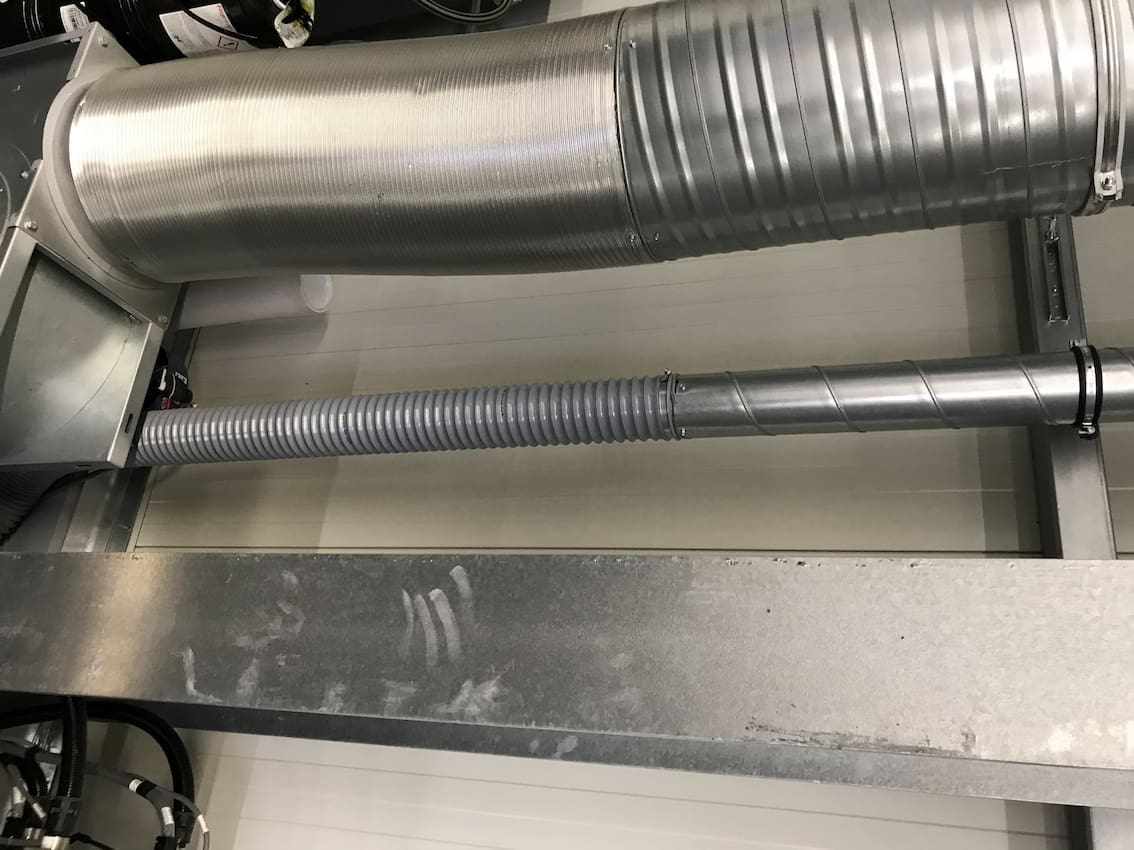
Problems often occur when the exhaust system, located after the cooling fan, is not up to the task of effectively removing all the ozone. The result, over time, is rusting of the metal components and a consequent drop in performance…and eventual failure. It can be overcome easily by adopting a professional approach and the right technology to the exhaust, which should be considered an intrinsic part of the industrial production process, not treated as an afterthought.
The problem is often identifying whose responsibility it is to engineer the evacuation. In the case of UV curing this is clear, and appropriate technology is installed to ensure the system functions at optimum level – corona is easily forgotten, although no less important. What is needed is better education and improved cooperation between suppliers and customers. Tackled correctly at installation, it never becomes a problem, but left unaddressed, it causes loss of quality and poor production efficiency.
Vetaphone technicians are trained to deal with this situation but need the understanding of all other parties to devise and implement a satisfactory arrangement that prevents the problem developing. It’s a very easy way of protecting your investment – both the corona unit and the entire line.
The ceramic electrodes that are an integral part of the corona treater are sensitive, and do not respond well to abuse in the form of overheating, vibration or impact. The first can be resolved by efficient cooling from a well-designed and installed exhaust system, and by ensuring the gap between electrode and substrate remains at 1.5mm, allowing a cooling air flow.
There are two simple tasks for the operator: to check from time to time that the gap between electrode and substrate remains at 1.5mm and that no dirt blocks the exhaust air flow.
The key to prolonged component life is care and attention – it’s as simple as that!
The image at the top of this page shows overheating, where a converter was using more than 5m of flexible tubing in the outlet, which reduced airflow by 75%, and resulted in overheated electrodes.